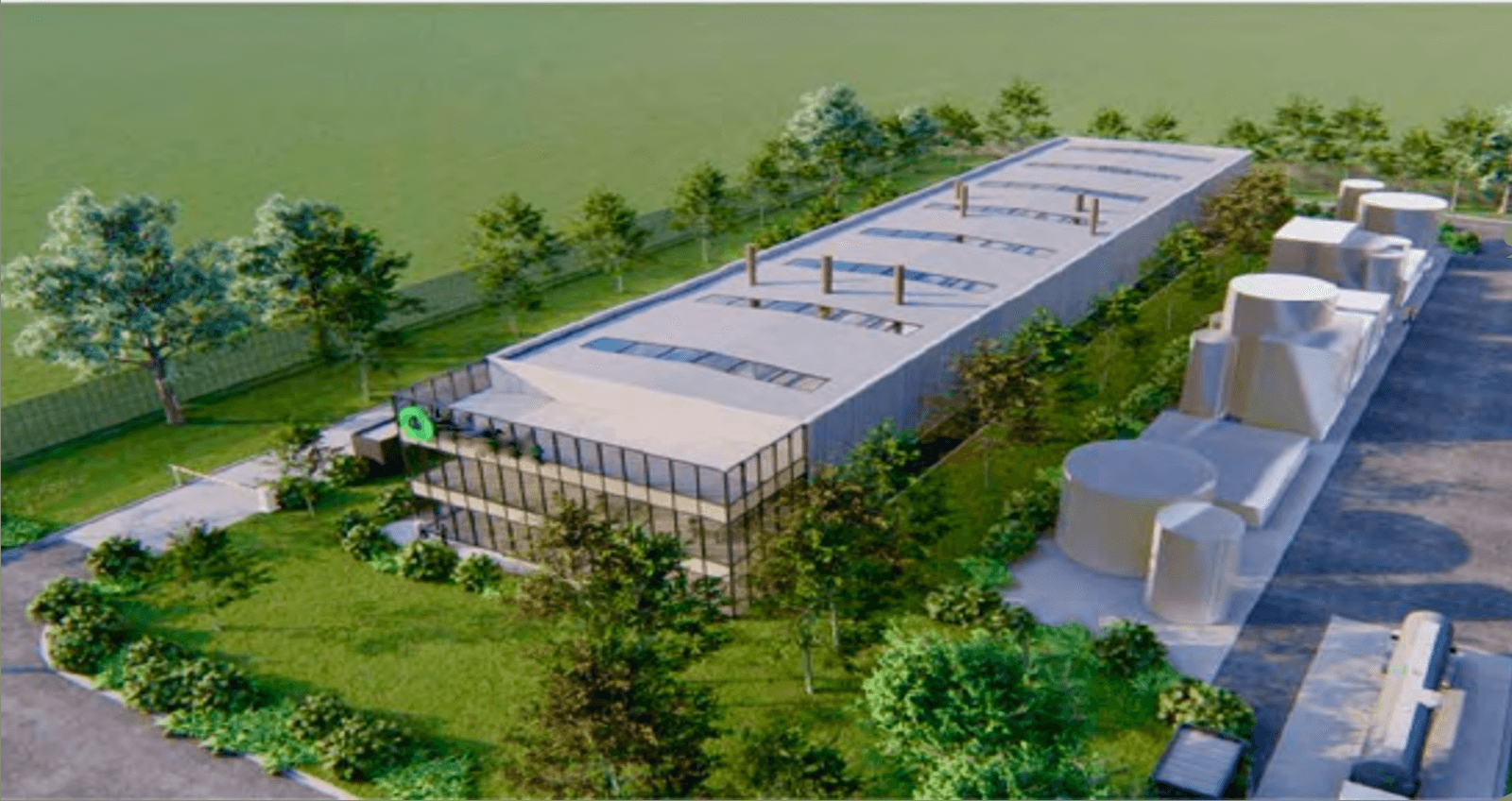
Aerial rendering of a modern GGEG waste-to-renewable-energy facility surrounded by green landscaping

North American project developer and operator

Converting Waste into Renewable Energy™

Developing North America's next generation of waste-to-renewable-energy facilities utilizing proven fourth-generation advanced pyrolysis technology.

Positioning

GGEG develops, owns, and operates projects. GGII supplies and licenses the technology platform.

About GGEG

Global Green Energy Group, Inc. is the Americas subsidiary of Global Green International Investments Pte Ltd and the exclusive license holder for patented waste-to-energy technology, converting waste into renewable energy products and recovered resources to help communities reduce landfill dependence and build a cleaner future.

GGEG is built to make complex waste-to-renewable-energy projects understandable to municipalities, investors, lenders, and local partners.

GGEG

North American project developer

GGEG is positioned as the project company that develops, owns, operates, and delivers waste-to-renewable-energy facilities across North America.

  • Business development
  • Owner and operator
  • EPC management
  • Project financing support
  • Permitting & regulatory compliance
  • Stakeholder Management
  • Investor communication

GGII

Technology partner and licensor

GGII is the technology company, supplying intellectual property, equipment, and the proven global advanced pyrolysis platform.

  • Intellectual property
  • Equipment platform
  • Advanced pyrolysis know-how
  • Technology licensing
  • Global partner network

Mission and Vision

Mission

Convert problematic waste streams into renewable energy, valuable recovered products, and durable local economic benefit.

Vision

Build a North American network of modular facilities that help municipalities and industrial partners move waste out of landfills and into the circular economy.

Corporate Values

Project disciplineOperational safetyCommunity partnershipEnvironmental accountabilityTransparent investor communicationCommercial pragmatism

Platform

Global technology relationship established around fourth-generation advanced pyrolysis systems.

Pipeline

North American development pipeline organized around waste tires, MSW, plastics, biomass, RDF, sludge, and other carbon based waste streams.

Execution

Initial facilities structured for Louisiana, West Virginia, Alberta, and additional development opportunities.

Management Team

Operator, engineering, and development leadership.

Executive and management biographies are available through GGEG's due diligence package for qualified investors, strategic partners, and project stakeholders.

Our Technology

Advanced pyrolysis explained from the project delivery side.

GGEG packages proven fourth-generation thermal conversion technology into modular facilities designed for local waste streams, reliable operations, and bankable output markets.

01

Feedstock Preparation

Waste streams are received, sorted, sized, and prepared for predictable processing.

02

Advanced Pyrolysis

Prepared material is thermally converted in a controlled, oxygen-limited environment.

03

Gas Recovery

Process gases are captured in a closed-loop system to support energy self sufficiency.

04

Output Refinement

Recovered streams are refined into renewable fuels, oil, power, carbon black, steel, hydrogen options, and carbon-credit pathways.

Technology Advantages

Commercially proven

Modular design

40 TPD processing modules

Twin chamber process

Energy self sufficiency

Negative pressure operation

Closed loop gas recovery

Low emissions

Tier 1 technology partners

Scalable deployment

Rapid project phasing

Local feedstock flexibility

Solutions

Waste streams become engineered project opportunities.

Each facility can be structured around local feedstock supply, municipal priorities, permitting requirements, and offtake demand.

Waste Tires

Site-specific intake, preparation, conversion, and output strategy for scalable deployment.

Municipal Solid Waste

Site-specific intake, preparation, conversion, and output strategy for scalable deployment.

Plastics

Site-specific intake, preparation, conversion, and output strategy for scalable deployment.

Biomass

Site-specific intake, preparation, conversion, and output strategy for scalable deployment.

RDF

Site-specific intake, preparation, conversion, and output strategy for scalable deployment.

Sewage Sludge

Site-specific intake, preparation, conversion, and output strategy for scalable deployment.

Products

Multiple output pathways for diversified project economics.

Final output mix depends on feedstock, project configuration, offtake partners, and local market requirements.

Renewable Diesel
Renewable Oil
Electricity
Hydrogen
Recovered Carbon Black
Steel
Carbon Credits

Current Projects

A project pipeline built for investor and municipal clarity.

The site separates each development by scale, partners, economic benefits, schedule, outputs, map content, and gallery materials.

Louisiana

200 TPD Facility

Project timeline and execution milestones

Partner and municipal coordination

Economic benefits and job creation

Output profile for fuels, power, carbon black, and steel

Map, site photography, and gallery package

West Virginia

120 TPD Facility

Investment package and project finance pathway

Output schedule and commercial assumptions

Development schedule

Regional feedstock and offtake strategy

Community and economic impact narrative

Alberta, Canada

Municipal Waste Project

Municipal solid waste diversion

Hydrogen production option

Landfill reduction and methane avoidance

Long-term public-private business model

Scalable modules for future phases

Future Developments

PennsylvaniaMontanaIdahoAdditional Canadian Opportunities

Investors

A cleaner diligence path for project finance.

The investor section is structured around investment highlights, pipeline review, financial model access, IRR materials, NDA requests, and controlled data-room entry.

North American project developer with defined role clarity

Waste diversion plus renewable fuel production

Modular 40 TPD systems that can be phased by site

Multiple revenue streams from fuel, power, materials, and credits

Project pipeline designed for municipal and industrial partnerships

Diligence package, financial model, and project profiles available under NDA

Municipalities

Local waste problems can become local infrastructure assets.

GGEG projects are positioned for communities seeking landfill diversion, reduced tire stockpiles, economic development, and long-term operating partnerships.

Landfill diversion

Economic development

Local jobs

Reduced methane exposure

Reduced tire stockpiles

Long-term partnership structure

ESG

Carbon reduction, circular economy, and compliance built into project delivery.

Carbon Reduction

Facilities are positioned to reduce landfilled waste, methane exposure, and fossil-derived output demand.

Circular Economy

Waste streams are converted into renewable fuels, recoverable materials, and future carbon-credit opportunities.

Environmental Compliance

Project delivery emphasizes low emissions, closed-loop recovery, negative pressure operation, and documented compliance.

Net Zero Alignment

GGEG projects can support municipal, industrial, and investor net-zero objectives through measurable diversion and energy outputs.

UN SDGs

The ESG narrative can be mapped to relevant UN Sustainable Development Goals through clean energy, responsible consumption, sustainable cities, climate action, and industry innovation.